Home › Travel guides › Medellín
Medellín historyPablo Escobar Museum and Neighborhood in Medellín: What You Will Find and How to Visit
Where the museum is, what the Pablo Escobar neighborhood is and how to learn this history with context and respect for the victims.
By Viajes Maxitours TeamUpdated: October 19, 20266 min read
- Museum
- El Poblado, guided visit
- Neighborhood
- Comuna 9, Medellín
- Neighborhood origin
- 1980s
- Place of death
- Los Olivos, 1993
- Grave
- Montesacro, Itagüí
- Memory
- Inflexión Park
Many travelers arrive in Medellín with questions about Pablo Escobar: where he lived, where he died, where the museum is and what the neighborhood that bears his name is. These are fair questions, and the best way to answer them is with clear information and with respect for the thousands of victims that era left behind.
In this guide we explain where the Pablo Escobar Museum is, what the Pablo Escobar neighborhood is, which other places are connected to that history and how to visit them responsibly.
Before you start: the context
Pablo Escobar was the head of the Medellín Cartel and one of the most violent criminals in Colombia’s history. From the 1980s to the early 1990s, the drug war left thousands dead in the city: police officers, judges, journalists, politicians and, above all, ordinary citizens. Escobar died on December 2, 1993, killed by the police in the Los Olivos neighborhood.
The city has worked for decades to leave that image behind. That is why the mayor’s office and many residents reject so-called narco-tourism, which presents Escobar as an admirable figure. A good tour does not glorify: it explains, gives context and remembers the victims.
The Pablo Escobar Museum in El Poblado
In El Poblado, at Calle 10B #28-90, is the Museum Pablo Escobar, a private museum that displays photographs, vehicles and objects from the era. Visits are guided and last about 50 minutes. This is the museum we visit on our tour.
Keep in mind that it is a private space, not an official museum or a place of memory. That is why on our tour we pair it with Inflexión Park (Parque de la Inflexión), where the city remembers the victims.
If you want to understand this history from the perspective of memory, the right place is the Museo Casa de la Memoria (House of Memory Museum), a public museum dedicated to the armed conflict and its victims. We cover it in our guide From the Monaco Building to Inflexión Park.
The Pablo Escobar neighborhood
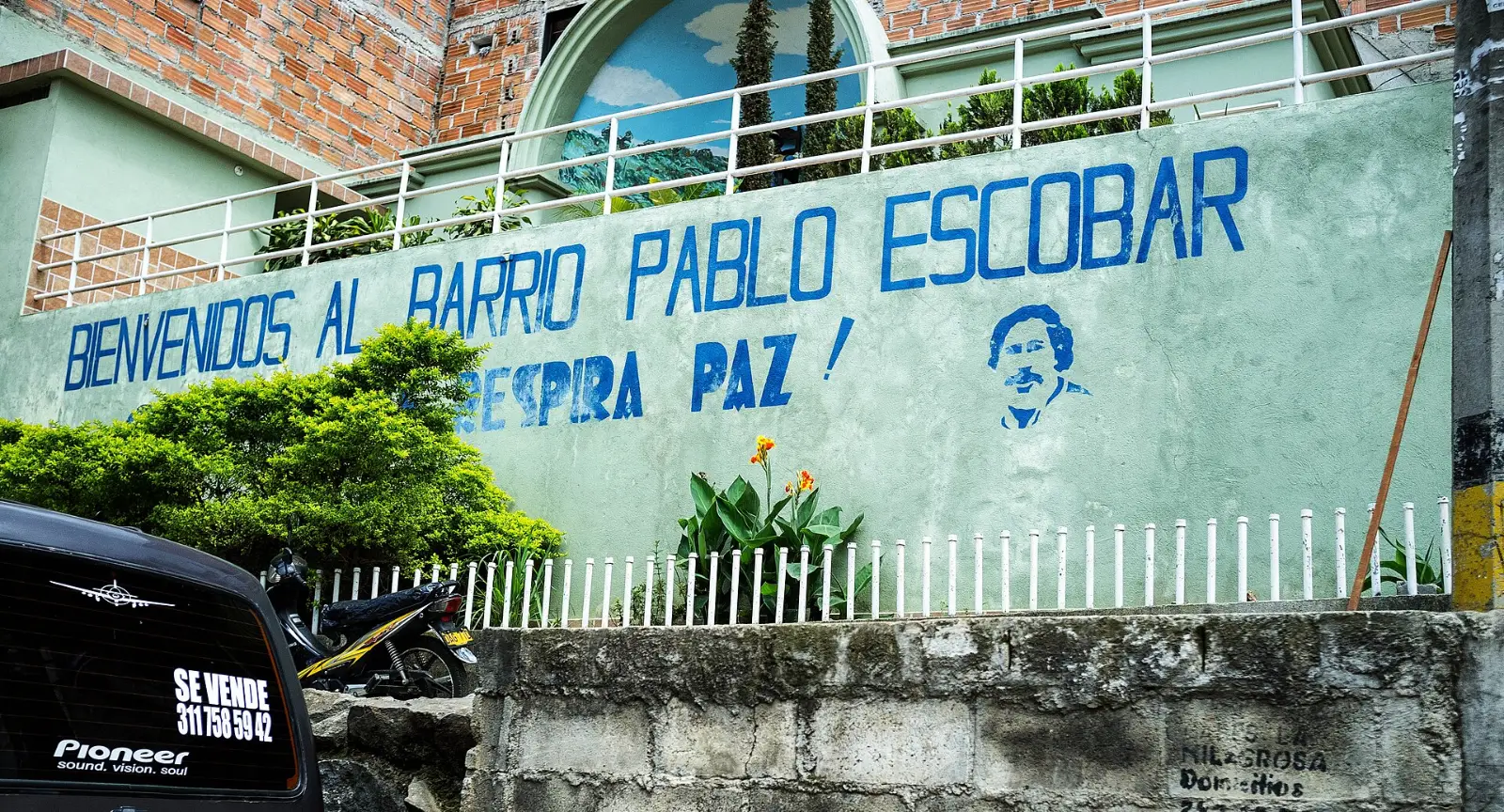
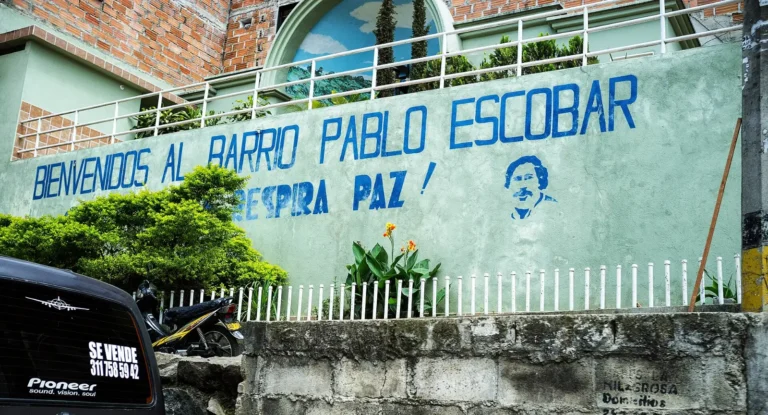
In Medellín’s Comuna 9, on the eastern hillside, is the neighborhood popularly known as barrio Pablo Escobar. Its origins go back to the early 1980s, when Escobar paid for the construction of housing for families who lived in the Moravia garbage dump and had been affected by a fire in 1982. It was part of a strategy to win popular support while he was pursuing a political career.
Today it is a residential neighborhood whose residents hold very different opinions about that history. For years it had a large mural with Escobar’s face, which was painted over in January 2025. Visiting it helps you understand how part of the population related to the drug lord and why that history remains complex in the city.
Recommended tour
Pablo Escobar Tour in Medellín
- Hotel pickup and guide
- Pablo Escobar Museum in El Poblado
- Pablo Escobar neighborhood and Inflexión Park
- Los Olivos and Montesacro cemetery
From COP 289,000 per person · no deposit
You can pay in US dollars at the day’s exchange rate. Ask your advisor for the current rate.
Other places connected to this history
Los Olivos
In the Los Olivos neighborhood, in the Laureles area, is the house where Escobar was killed by the police on December 2, 1993. It is a private residence and cannot be visited inside; the stop is made outside, with an explanation from the guide.
Jardines Montesacro Cemetery
This cemetery in Itagüí, at the southern end of the Aburrá Valley, holds the grave of Escobar and several of his relatives. It is a working cemetery, so visits should be made in silence and with respect for other families.
Inflexión Park
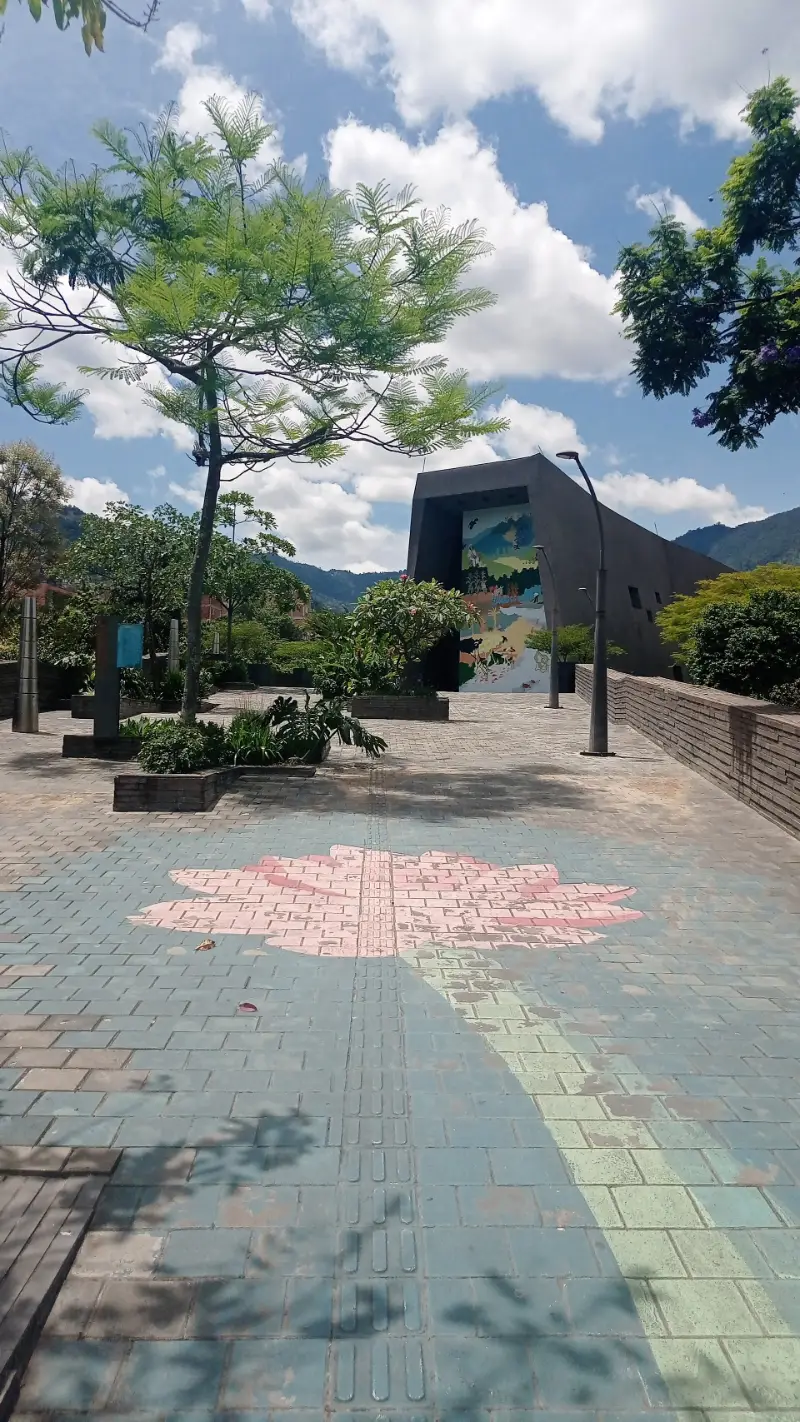
On the site where the Monaco Building (Edificio Mónaco), one of Escobar’s residences, once stood, there is now a park dedicated to the victims of narco-terrorism. It is an essential stop to understand how the city chose to remember that era.
How to visit these places responsibly
- Choose a tour with a historical focus, one that tells the full context and talks about the victims.
- Avoid buying souvenirs with Escobar’s image. For many families in Medellín it is offensive.
- Respect the residents of the neighborhoods: ask permission before taking photos of people.
- Stay quiet at the cemetery and at places of memory.
- Round out your visit with the Museo Casa de la Memoria or Inflexión Park.
The Pablo Escobar Tour in Medellín visits the Pablo Escobar Museum, the Pablo Escobar neighborhood, Inflexión Park, Los Olivos and Montesacro cemetery with a guide who explains the history and its impact on the city.
Frequently asked questions
Where is the Pablo Escobar Museum?
In El Poblado, at Calle 10B #28-90. It is a private museum with a guided visit of about 50 minutes, included in the Pablo Escobar Tour in Medellín.
Where is the Pablo Escobar neighborhood?
In Medellín’s Comuna 9, on the eastern hillside of the city.
Why is there a Pablo Escobar neighborhood?
Because in the early 1980s Escobar paid for housing for families who lived in the Moravia garbage dump, as part of a strategy to win popular support.
Where did Pablo Escobar die?
In a house in the Los Olivos neighborhood of Medellín, on December 2, 1993.
Where is Pablo Escobar buried?
In Jardines Montesacro cemetery, in Itagüí, at the southern end of the Aburrá Valley.
Is it okay to take a Pablo Escobar tour?
Yes, if it has a historical focus, explains the context and acknowledges the victims, instead of glorifying the drug lord.
Keep planning your trip

Viajes Maxitours TeamTour agency in Medellín, registered with Colombia’s National Tourism Registry (RNT 172253). We run day tours from Medellín and write these guides based on what we see on every trip.